Module 02
Boards and sprints
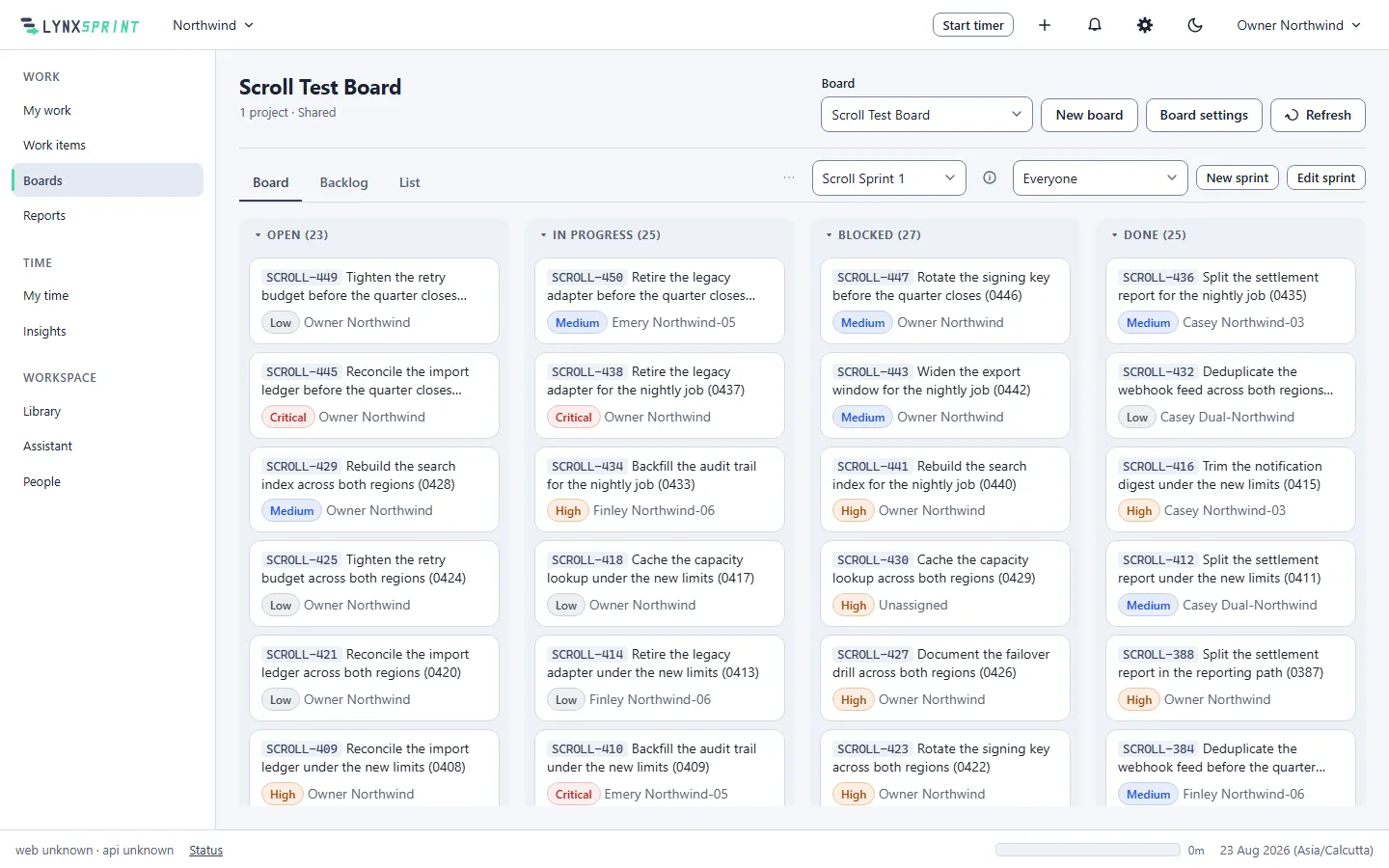
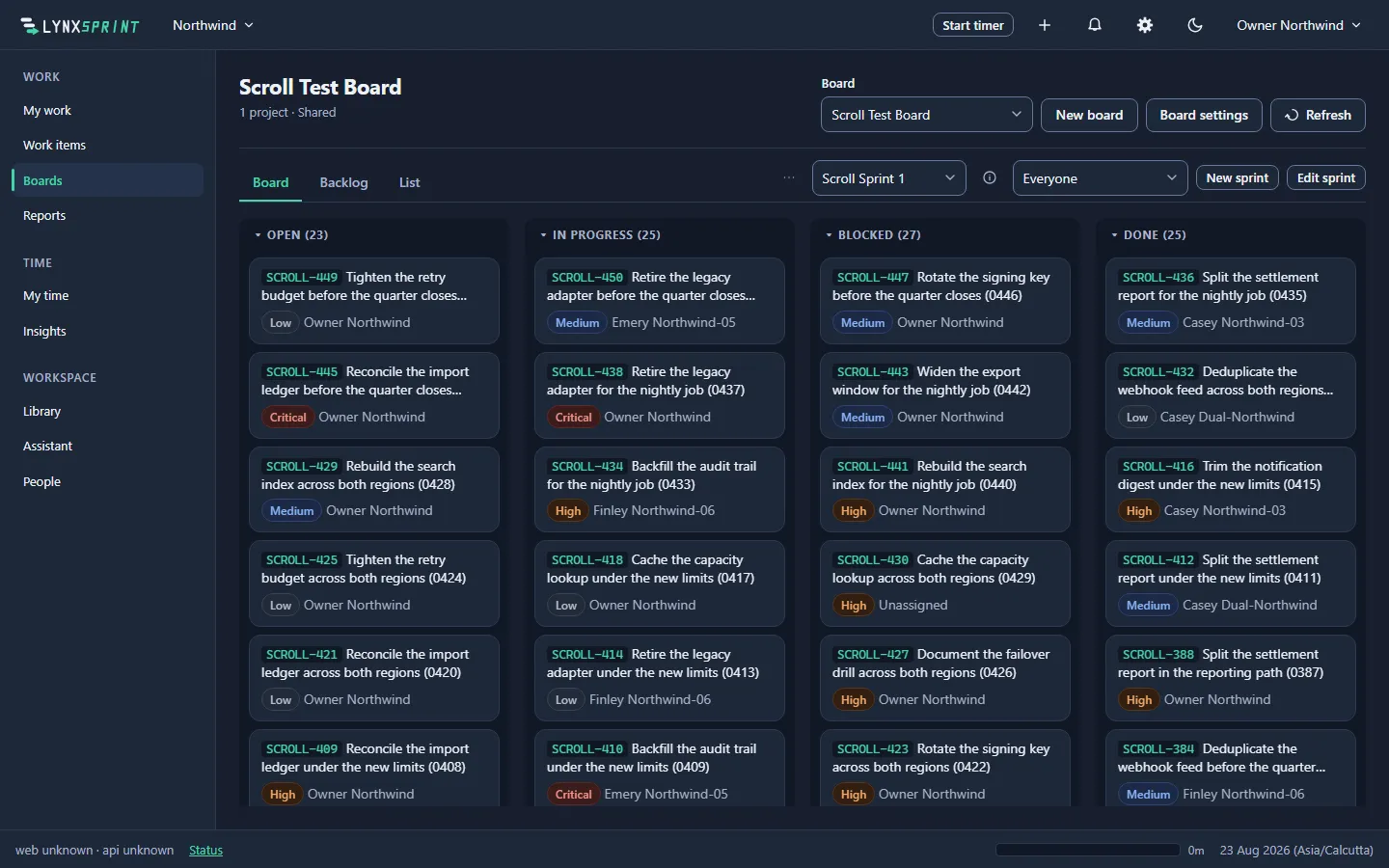
A board is a view over work items, not a second place they live. Nothing on it is a copy of anything.
What it does
- One board, several projects
- A board draws from as many projects as you point it at, so a team working across three of them plans in one place instead of three.
- Sprints with a goal and dates
- A sprint carries a goal and a start and end date, and the schema refuses one date without the other. A half-dated sprint is the kind of record that quietly breaks every report downstream.
- Shared or private
- A private board is invisible to everybody else, and asking for one by URL returns a not-found rather than a refusal, which would confirm it exists.
- The board is a view
- Moving a card transitions the work item. There is no board-only state that can drift from the item's real status, because there is no second copy to drift.
What it is not
Naming the ceiling is what makes everything above it credible. The roadmap says which of these are deferred and why.
- Ranked drag-and-drop ordering within a lane.
- Automated builds or deployment integration.
- Story points as a first-class estimate type. Estimates are durations.
The rest of the product
-
Module 01
Work items and projects
Your own vocabulary, typed custom fields, links and saved searches.
-
Module 03
Time tracking
Timer, day timeline and week grid, over correct time-zone arithmetic.
-
Module 04
Timesheets and approvals
A state machine with a decision log, and nobody approves their own.
-
Module 05
Reports and insights
Distribution and timeline reports, utilization, and CSV export.
-
Module 06
The Library
Collections and articles under one permission model, stored as markdown.
-
Module 07
Permissions and people
112 codes, 7 scopes, 9 role templates, and an append-only audit trail.
-
Module 08
Service desk and portal
Queues, SLA clocks against your working calendar, and a customer portal.