Module 06
The Library
Documentation lives beside the work rather than in a second product with a second permission model.
What it does
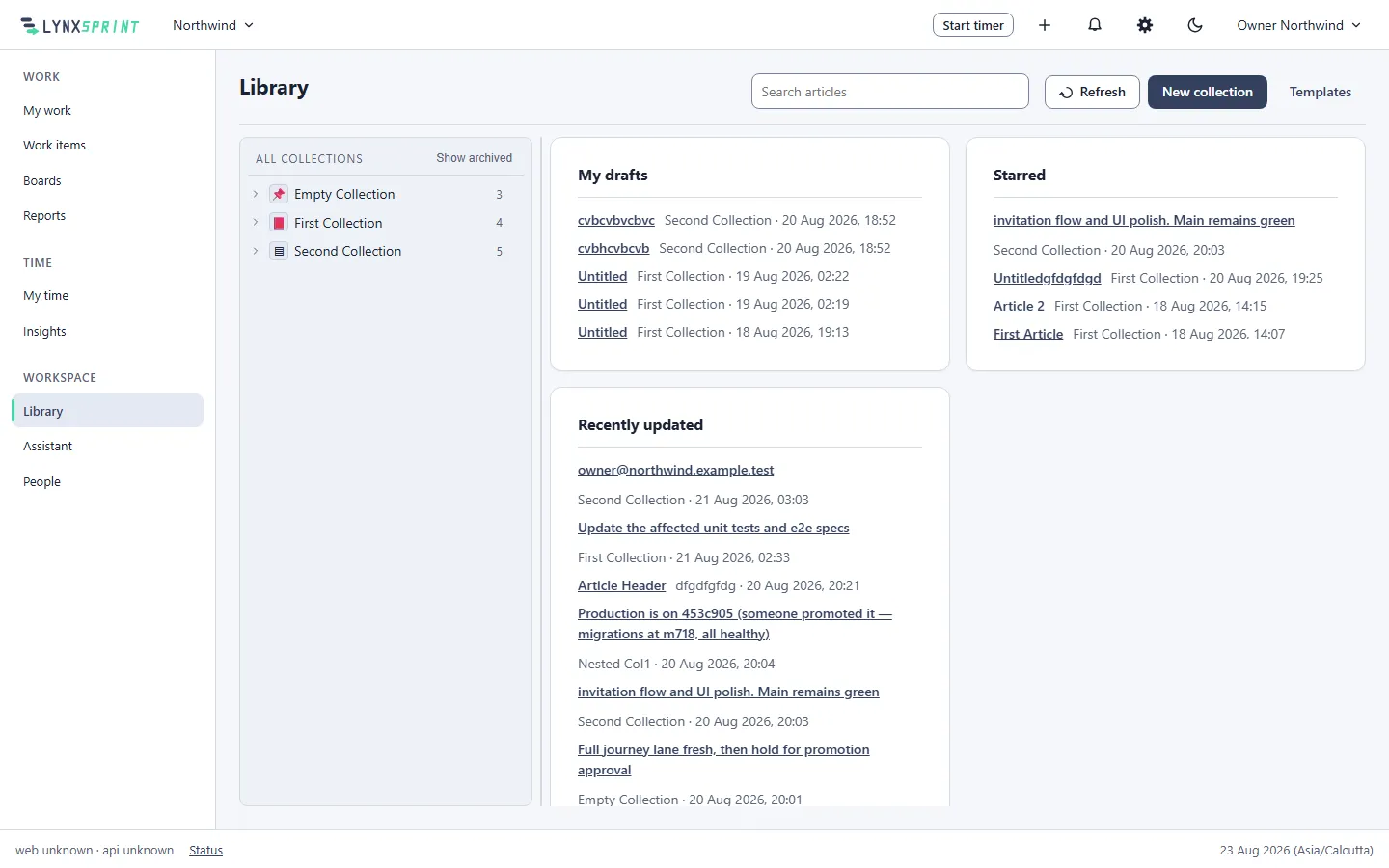
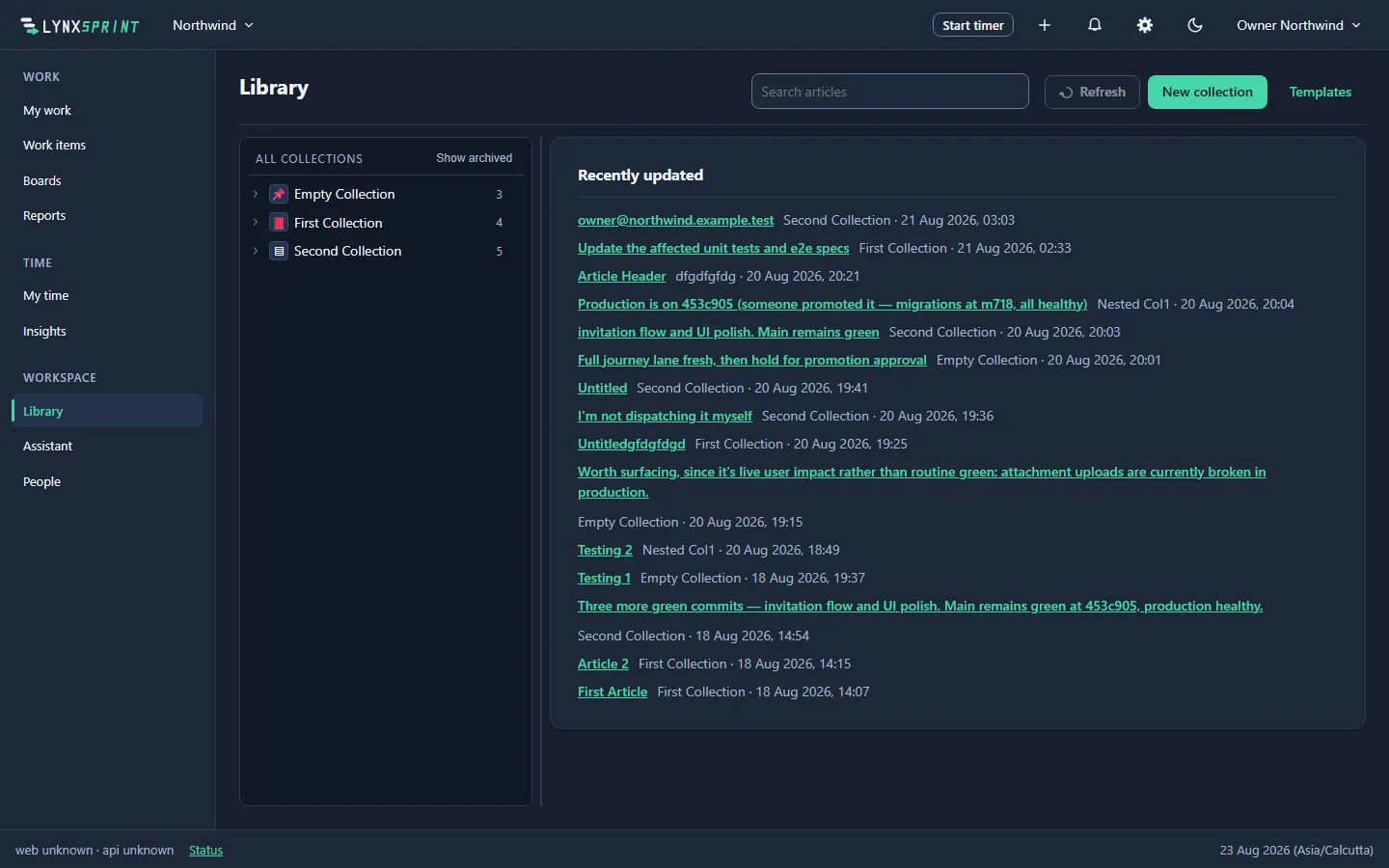
- Markdown is the storage format
- One renderer and one cross-site-scripting story. History is a readable text diff, export is the file itself, and nothing is trapped in a proprietary document format.
- One login, one permission model, one audit trail
- An article obeys the same permission catalogue as a work item. Nobody administers a second product to decide who reads what.
- Revisions, comments and templates
- Every article keeps its revision history. Comments use the same renderer as descriptions, and starter templates give a collection a shape on the day it is created.
- Export it and leave
- A collection exports as markdown files in a zip, and markdown imports back. An exit route that works is the only version of that promise worth making.
What it is not
Naming the ceiling is what makes everything above it credible. The roadmap says which of these are deferred and why.
- Real-time collaborative editing.
- Public publishing of an article outside the organization.
- Whiteboards or diagramming.
The rest of the product
-
Module 01
Work items and projects
Your own vocabulary, typed custom fields, links and saved searches.
-
Module 02
Boards and sprints
Boards across several projects, sprints with goals, and a backlog.
-
Module 03
Time tracking
Timer, day timeline and week grid, over correct time-zone arithmetic.
-
Module 04
Timesheets and approvals
A state machine with a decision log, and nobody approves their own.
-
Module 05
Reports and insights
Distribution and timeline reports, utilization, and CSV export.
-
Module 07
Permissions and people
112 codes, 7 scopes, 9 role templates, and an append-only audit trail.
-
Module 08
Service desk and portal
Queues, SLA clocks against your working calendar, and a customer portal.